MAAIM Inaugural Hall of Honor Candidates

MAAIM Hall of Honor celebrates Native people who are making a difference by advancing culture, education, innovation, and community impact in meaningful and lasting ways. This new initiative recognizes individuals whose lives and work inspire others while strengthening Native communities for future generations. Honorees may include individuals who: 

  • ​​​​Create meaningful art Lead and serve their communities 
  • Support and mentor Native youth Excel in athletics and sports 
  • Preserve Native culture and language 
  • Advance STEM, education, or healthcare 
  • Advocate for their tribe and Native communities 
  • Inspire pride, resilience, and opportunity for others.

Save the Date! Friday, November 6 | 6:00 PM

Join us for the inaugural Hall of Honor as we celebrate our first class of honorees, hear their inspiring stories, and be among the first to experience the new Hall of Honor exhibit. Together, we'll recognize Native leaders whose legacies continue to shape our communities and inspire the next generation.

2026 Hall of Honor Honor​​ees

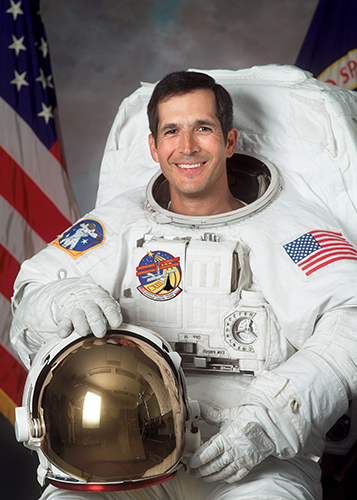
John Herrington (Chickasaw Natio​​n)

John Herrington is a retired NASA astronaut, U.S. Navy commander, and enrolled citizen of the Chickasaw Nation. In 2002, he made history as the first enrolled member of a federally recognized Native American tribe to travel into space aboard Space Shuttle Endeavour during the STS-113 mission to the International Space Station. During the 13-day mission, he logged more than 330 hours in space and completed three spacewalks totaling nearly 20 hours. He proudly carried the Chickasaw Nation flag and a traditional Native flute into space, honoring his heritage while inspiring future generations.

Following his retirement from NASA and the U.S. Navy, Herrington has dedicated his time to encouraging young people to pursue careers in science, technology, engineering, and mathematics (STEM). Through his speaking engagements and educational outreach, he continues to inspire Native youth to dream boldly, break barriers, and see themselves represented in fields once thought impossible.

Cheri Madsen (Omaha Tribe)

Cheri Madsen is a proud member of the Omaha Tribe and one of the most accomplished athletes in Paralympic track and field history. A 10-time Paralympic medalist and Olympic bronze medalist, she has represented the United States on the world’s biggest stages across four Paralympic Games—Atlanta 1996, Sydney 2000, Rio 2016, and Tokyo 2020—earning widespread recognition for her speed, resilience, and longevity in the sport. After stepping away from elite competition in 2023, Cheri transitioned into coaching, dedicating her time and experience to mentoring the next generation of adaptive athletes. Through her work, she continues to make a lasting impact, helping young competitors build confidence, develop their skills, and pursue their own dreams in sport. Cheri’s journey reflects not only athletic excellence but also a deep commitment to giving back to the adaptive sports community and honoring her roots as a Native athlete.

Francis Blackbear Bosi​​n (Kiowa-Comanche)

Francis Blackbear Bosin (Kiowa/Comanche) was a nationally acclaimed artist, storyteller, and cultural ambassador whose work forever shaped the identity of Wichita. Best known as the creator of the iconic Keeper of the Plains, Bosin also earned national recognition as one of the most influential Native painters of the twentieth century. Blending the traditional Kiowa flat style with elements of European illusion and surrealism, he created a distinctive artistic voice that brought Native history, spirituality, and oral traditions to life. His paintings imagined a world where Indigenous cultures continued to flourish, telling stories through the eyes of Native people rather than through the lens of conquest. A founding member of the Mid-America Indian Center, Bosin dedicated his life to preserving and sharing Native culture through art, education, and community leadership, leaving a legacy that continues to inspire generations.​

(People's Choice) Eugene “Louie” Stumblingbear (Kiowa Tribe of Oklahoma)

A longtime museum volunteer and community leader, Louie proudly shared his Kiowa heritage through service and cultural leadership. In 1996, he helped escort the Olympic torch in Wichita's historic 31-canoe relay—the only place in the United States where the torch traveled by water.​​

(People's Choice) Mark Brown (Lak​​ota)

A respected elder and spiritual leader, Mark has devot​ed decades to supporting the Native community through blessings, smudges, and mentorship. He has also helped organize Wichita's annual Sobriety Powwow for more than a decade, promoting healing and cultural connection.​​​